
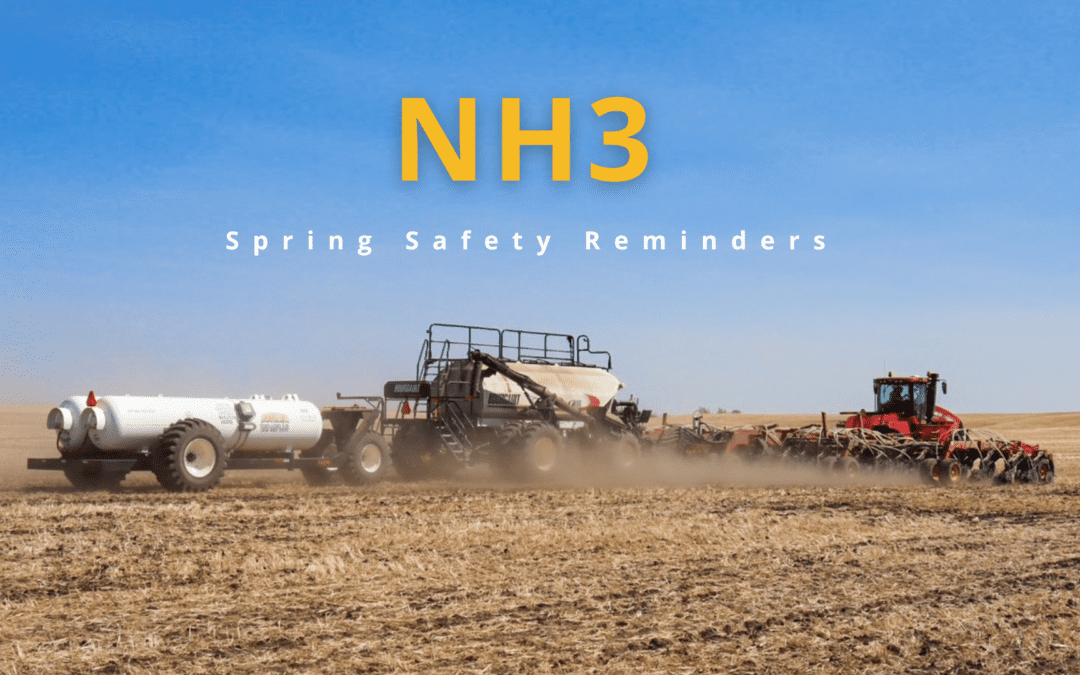
As seeding season gets underway, it is a good time for a quick NH3 safety refresher before heading to the field. Most operators are experienced handling anhydrous ammonia, but after a long winter, taking a few minutes to review equipment and procedures can go a long way toward preventing incidents during the busiest time of year.
Start With a Full Equipment Check
Before the season ramps up, take a few minutes to inspect your NH3 equipment and review everything before heading to the field. For customers using rented equipment, our team has already completed preseason inspections and servicing, but it is still good practice for operators to do a quick walkaround before transport and application.
Take time to check:
- Hoses for wear, cracks, blistering, or soft spots
- Couplers and fittings for leaks or corrosion
- Bleeder valves and main shutoffs
- Nurse tank tires, wheel bearings, and safety chains
- SMV signs, reflectors, and lighting
- Applicator manifolds and knives
If something does not look right, stop and address it before continuing. Seeding season is busy, but taking a few extra minutes before heading out can help prevent downtime and improve safety in the field.
Confirm Your Safety Equipment Is Ready
Every NH3 setup should have properly maintained PPE and emergency supplies readily available.
Double check:
- Gloves are ammonia-rated and in good condition
- Goggles and face shields are clean and accessible
- Emergency water tanks are full and functional
- Safety kits are stocked
Clean water remains the first line of defense in the event of exposure. Make sure it is easy to access from both the nurse tank and applicator.
Slow Down During Hookups
Many NH3 incidents happen during connecting and disconnecting. Even for experienced operators, it is easy to become rushed during long days and tight weather windows.
A few good reminders:
- Always wear PPE when handling hoses
- Stand upwind whenever possible
- Make sure bleed valves are closed before opening valves
- Open valves slowly
- Never lean directly over fittings
- Verify couplers are fully seated before pressurizing
Keep Transport Safety Top of Mind
Road conditions during spring can change quickly, especially on grid roads and soft approaches.
Before transporting nurse tanks:
- Inspect hitch pins and safety chains
- Check tire pressure and wheel condition
- Confirm lighting and SMV signage are visible
- Allow extra stopping distance
- Reduce speed on rough or uneven roads
Spring traffic also increases significantly during seeding, so staying visible and cautious around intersections is important.
Review Emergency Procedures Before You Need Them
Nobody plans for an ammonia release, but reviewing response procedures ahead of time helps operators react quickly if something happens.
In the event of exposure:
- Move away from the release immediately
- Flush exposed skin or eyes with clean water for at least 15 minutes
- Remove contaminated clothing carefully
- Seek medical attention right away and never use a salve! Only water can be used on NH3 burns.
For larger leaks:
- Keep others clear of the area
- Stay upwind
- Contact emergency services if necessary
- Notify Horizon Fertilizers
A Safe Start Leads to a Better Season
NH3 is a valuable tool during seeding season, and safe handling starts with preparation. A preseason inspection and quick safety review can help reduce downtime, prevent accidents, and keep everyone working safely during the busiest time of year.
If you have questions about NH3 equipment, tank inspections, replacement parts, or servicing before spring application begins, our team is here to help.
Have a safe and successful spring.
